Key Facts (Quick Overview)
- Policy Framework: National Biofuel Policy India 2026 (based on NBP 2018)
- Biodiesel Target: 5% biodiesel blending by 2030
- Current Blending: ~0.6% in FY25 (Ind-Ra, 2025)
- OMC Tender Volume: ~0.86 billion litres (Oct 2024–Sep 2025)
- Procurement Price: ₹91.20/litre (Oct–Jan), ₹100.12/litre (Feb–Sep 2025)
- Buyers: IOCL, HPCL, BPCL (Oil Marketing Companies)
- Manufacturer: Shree Ganpati Biofuel, Bijnor, Uttar Pradesh (50 KLPD, DPIIT-recognised)
What is India’s National Biofuel Policy 2018?
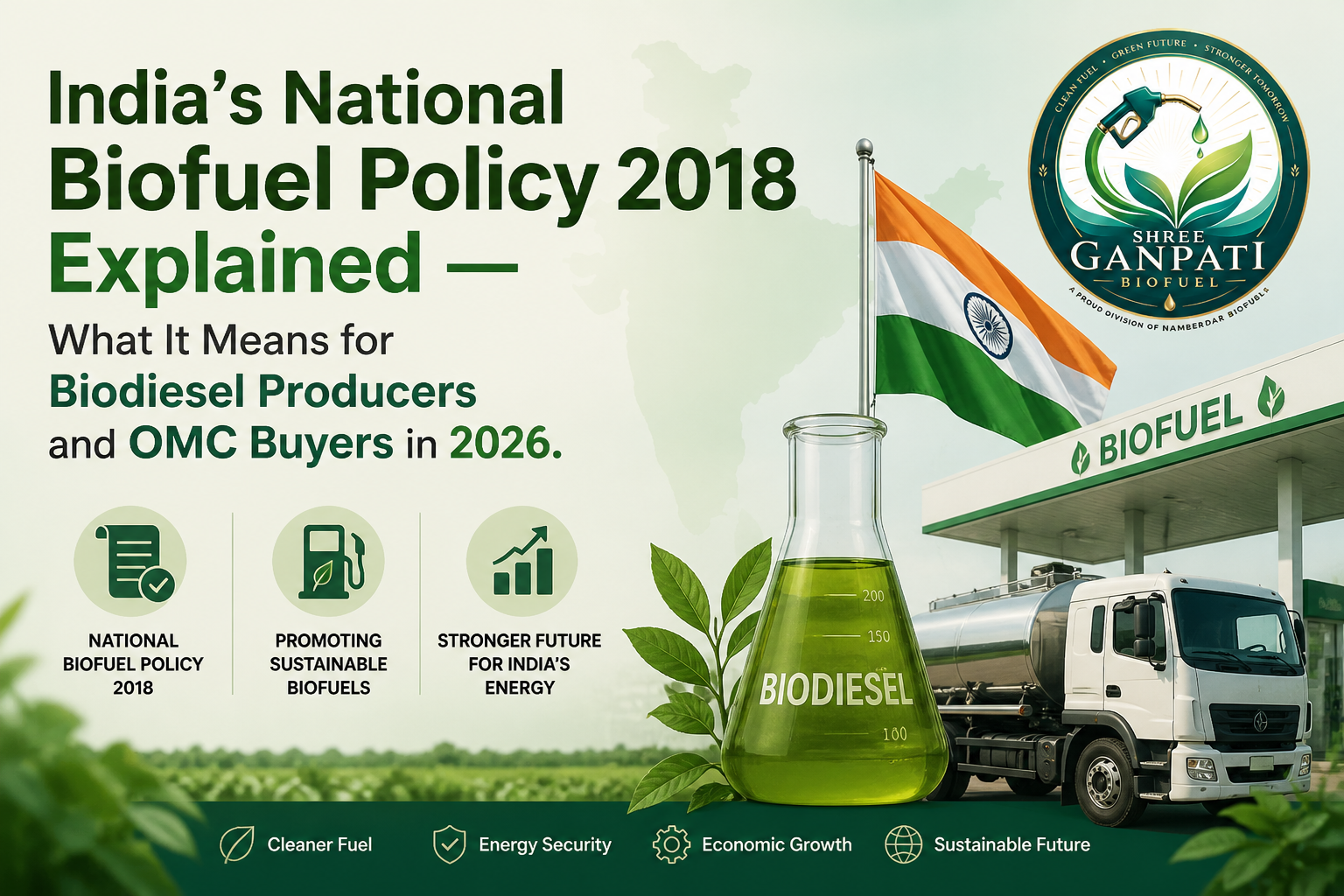
The National Biofuel Policy India 2026 is rooted in the original NBP 2018 biodiesel framework, which was introduced to reduce India’s dependency on imported crude oil and promote renewable energy sources like ethanol and biodiesel.
Under this policy, biodiesel production is encouraged through:
- Use of alternative feedstocks like used cooking oil (UCO), non-edible oils, and animal fats
- Structured procurement by Oil Marketing Companies (OMCs)
- Incentives for manufacturers and infrastructure development
The policy also defines blending targets and establishes a clear roadmap for scaling biofuel adoption. For stakeholders, NBP 2018 biodiesel is the foundation that governs pricing, procurement, and supply chain development in India’s biodiesel industry.
What is the 5% Biodiesel Blending Target and Where Does India Stand Today?
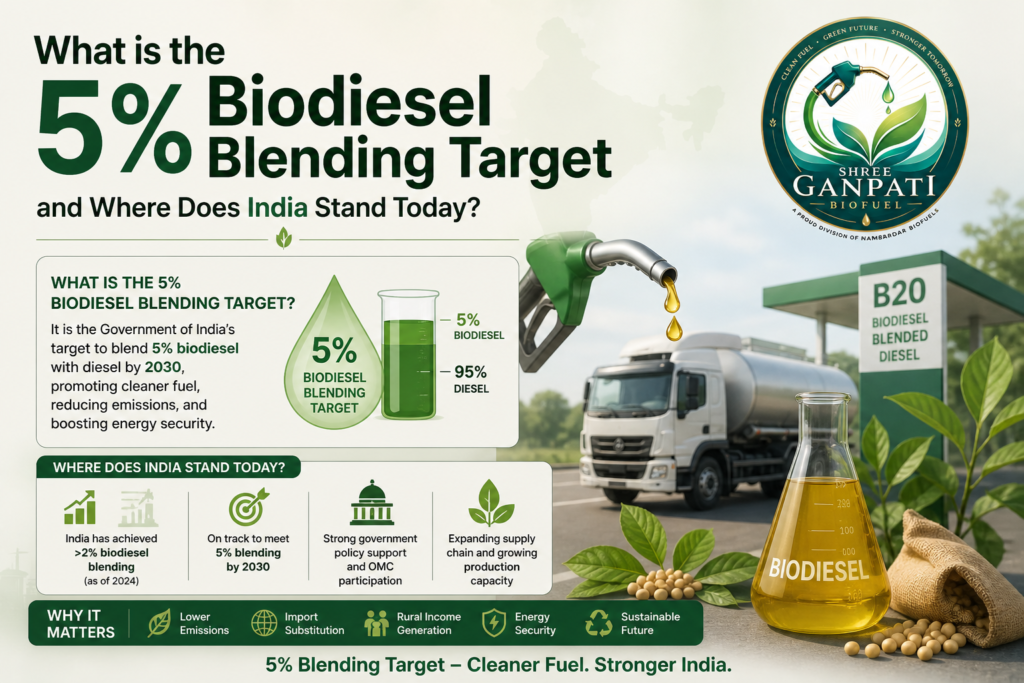
India has set a target of achieving 5% biodiesel blending by 2030, which means that 5% of total diesel consumption should be replaced with biodiesel.
However, the current biodiesel blending rate India is only around 0.6% in FY25, according to Ind-Ra (2025). This highlights a significant gap between current supply and policy targets.
Why This Gap Matters?
- Massive demand opportunity for biodiesel producers
- Increased procurement pressure on OMCs
- Long-term contracts and supply stability for manufacturers
- Investment potential for new and expanding plants
For businesses, this gap represents one of the biggest growth opportunities in India’s renewable energy sector. The push toward 5% biodiesel blending 2030 will require a rapid increase in production capacity and supply chain efficiency.
Who Procures Biodiesel in India and How?
Biodiesel procurement in India is primarily handled by Oil Marketing Companies (OMCs), including:
- Indian Oil Corporation Limited (IOCL)
- Hindustan Petroleum Corporation Limited (HPCL)
- Bharat Petroleum Corporation Limited (BPCL)
These companies issue tenders and procure biodiesel from registered suppliers under the framework of OMC biodiesel procurement India.
Recent Procurement Insights
- Tender Volume: ~0.86 billion litres (Oct 2024–Sep 2025)
- Base Procurement Prices:
- ₹91.20/litre (October–January)
- ₹100.12/litre (February–September 2025)
These prices serve as benchmarks for the industry and directly influence supplier margins and market dynamics.
Procurement Process
- Tender issued (e.g., IOCL biodiesel tender)
- Suppliers submit bids
- Evaluation based on technical and commercial criteria
- Allocation of supply contracts
- Delivery to OMC depots
Additionally, starting April 2025, penalties on unblended diesel sales have increased compliance pressure, making biodiesel procurement even more critical.
What Does the Policy Mean for Biodiesel Manufacturers in Uttar Pradesh?
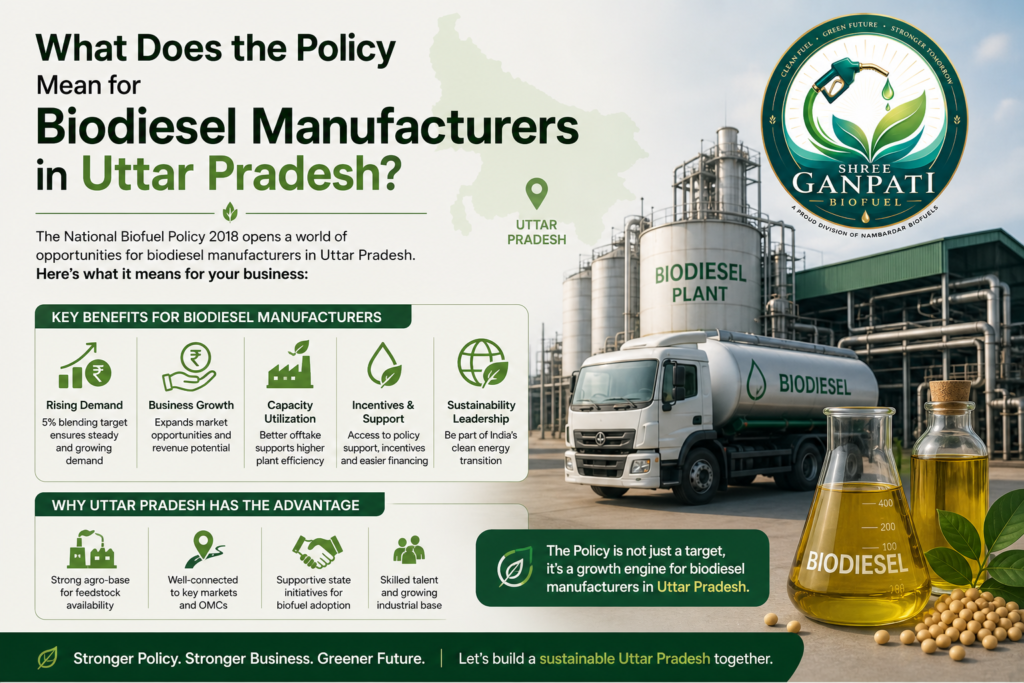
Uttar Pradesh is emerging as a strategic location under the evolving biofuel policy Uttar Pradesh framework. With strong connectivity to NCR and growing feedstock availability, the state offers significant advantages for biodiesel production.
Opportunities for Manufacturers
- Access to large markets (Delhi NCR, North India)
- Improved UCO collection networks
- Higher demand due to OMC procurement targets
- Favorable logistics and industrial infrastructure
Key Requirements
- Consistent supply capacity
- Compliance with BIS fuel standards
- Reliable feedstock sourcing
- Competitive pricing aligned with OMC benchmarks
For manufacturers aligned with NBP 2018 biodiesel, Uttar Pradesh presents a high-growth environment with strong policy support.
How Shree Ganpati Biofuel is Positioned for OMC Supply?
Shree Ganpati Biofuel is a DPIIT-recognised biodiesel manufacturer located in Bijnor, Uttar Pradesh, with a production capacity of 50 KLPD.
Key Strengths
- Strategic Location: Close to NCR and OMC depots
- Production Capacity: Suitable for large-scale tenders
- Advanced Processing: Industrial transesterification technology
- Feedstock Focus: UCO-based sustainable production
These factors position the company to participate effectively in IOCL biodiesel tender, HPCL BPCL biodiesel procurement cycles, and other bulk supply opportunities.
Key Policy Drivers Impacting the Industry
Several factors under the National Biofuel Policy India 2026 are driving demand:
1. Blending Mandates
The 5% biodiesel blending 2030 target ensures long-term demand.
2. Pricing Mechanisms
OMC base prices provide stability and predictability for suppliers.
3. Compliance Enforcement
Penalties on unblended diesel (from April 2025) increase demand for biodiesel.
4. Feedstock Expansion
Government initiatives support UCO and waste-based biodiesel production under the Ministry of Petroleum biofuel programs.
What OMC Procurement Teams Should Focus On in 2026
For procurement teams, selecting the right supplier is critical. Key considerations include:
- Supply reliability and volume consistency
- Fuel quality and compliance with standards
- Logistics and delivery capabilities
- Competitive pricing aligned with tender benchmarks
- Traceability of feedstock sources
These factors ensure efficient and compliant biodiesel procurement.
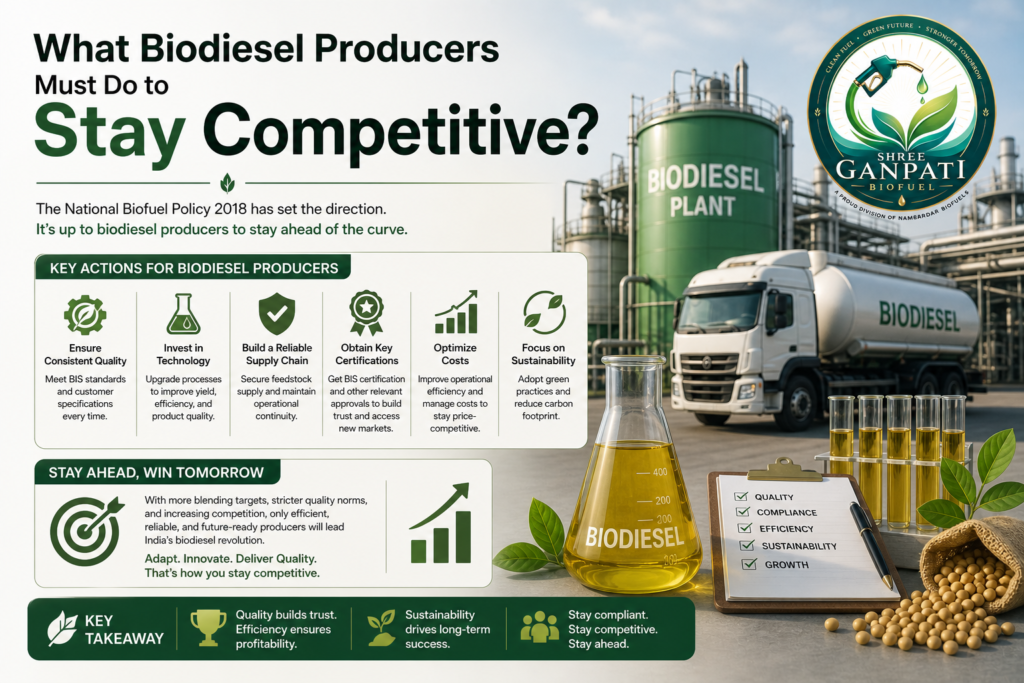
What Biodiesel Producers Must Do to Stay Competitive?
To succeed under OMC biodiesel procurement India, manufacturers should:
- Register and participate in OMC tenders
- Scale production capacity
- Secure long-term feedstock supply
- Maintain strict quality control
- Optimize operational efficiency and pricing
Meeting these criteria is essential to capture market share as demand increases.
Future Outlook for Biodiesel in India
The future of biodiesel in India is highly promising. With a large gap between current blending levels and policy targets, the industry is expected to grow rapidly over the next decade.
Advancements in production technology, expansion of UCO supply chains, and stronger policy enforcement will drive this growth. For both producers and buyers, understanding the National Biofuel Policy India 2026 is essential to capitalize on upcoming opportunities.
Conclusion
The NBP 2018 biodiesel framework, combined with evolving policy measures, is shaping India’s biodiesel market. With a clear target of 5% biodiesel blending 2030, the industry offers significant opportunities for manufacturers, suppliers, and procurement teams.
For companies like Shree Ganpati Biofuel, the focus is on scaling operations, ensuring quality, and aligning with OMC biodiesel procurement India frameworks to meet growing demand.
Frequently Asked Questions
1. What is India’s National Biofuel Policy for biodiesel?
India’s policy aims to achieve 5% biodiesel blending by 2030 under the NBP 2018 biodiesel framework.
2. What is the current biodiesel blending rate in India?
The biodiesel blending rate India is approximately 0.6% in FY25, indicating significant growth potential.
3. Who procures biodiesel in India?
Oil Marketing Companies like IOCL, HPCL, and BPCL handle biodiesel procurement through tenders.
4. What are the latest biodiesel procurement prices in India?
OMC base prices are around ₹91.20/litre (Oct–Jan) and ₹100.12/litre (Feb–Sep 2025).
5. Is biodiesel production a good opportunity in India?
Yes, due to low current blending levels and strong policy support, biodiesel production offers high growth potential.