
Biodiesel is a renewable, biodegradable fuel made from natural sources like used cooking oil (UCO), vegetable oils, and animal fats. In simple terms, what is biodiesel India refers to an eco-friendly alternative to traditional diesel that can be used in diesel engines with little or no modification.
As India moves toward cleaner energy and reduced crude oil dependency, biodiesel is becoming a key part of the fuel ecosystem in 2026. This guide explains the biodiesel definition, how it is produced, its properties, and how it is used across industries in India.
What is Biodiesel? (Definition)
Biodiesel is a type of renewable fuel made through a chemical process called transesterification, where fats or oils are converted into fuel. Chemically, it is known as fatty acid methyl ester, commonly referred to as FAME biodiesel.
In the Indian context, what is biodiesel India can be understood as a sustainable diesel substitute produced from waste oils like UCO. It is non-toxic, biodegradable, and produces significantly lower emissions compared to fossil diesel.
Unlike traditional fuels, biodiesel can be blended with diesel (B5, B10, B20) or used in pure form (B100), making it flexible for various applications.
What Determines Biodiesel Plant Cost in India?
The overall biodiesel plant cost India is influenced by multiple factors, starting with production capacity. A small plant requires less capital, while a large-scale facility demands higher investment due to infrastructure and machinery requirements. The type of feedstock—such as used cooking oil (UCO), vegetable oil, or animal fat—also impacts processing complexity and cost.
Another key factor is the level of automation. A fully automated system increases upfront investment but reduces long-term operational expenses. Additionally, location plays a major role in land cost, logistics, and labor availability. All these factors collectively determine the total biodiesel plant setup India, making it essential to evaluate each component carefully before investing.
How Biodiesel is Produced in India?
The process of biodiesel production India primarily involves converting oils and fats into usable fuel through transesterification India. This is the most widely adopted method across biodiesel plants.
1. Feedstock Collection
Raw materials like UCO, vegetable oils, or animal fats are collected.
2. Pre-Treatment
Impurities and water are removed to prepare the oil.
3. Transesterification
Oil reacts with alcohol (usually methanol) to form biodiesel and glycerin.
4. Separation & Purification
Biodiesel is separated, washed, and purified for use.
5. Final Product (FAME)
The output is FAME biodiesel, ready for blending or direct use.
This method ensures efficient biodiesel production India, especially with increasing use of UCO biodiesel India as a primary feedstock.
Biodiesel Fuel Properties
Understanding biodiesel fuel properties is essential for evaluating its performance and compatibility with engines. Compared to diesel, biodiesel offers better lubrication and cleaner combustion.
Key Properties of Biodiesel
| Property | Biodiesel (B100) | Diesel |
|---|---|---|
| Renewable Source | Yes | No |
| Biodegradability | High | Low |
| Sulfur Content | Very Low | Higher |
| Emissions | Lower CO, PM | Higher emissions |
| Lubricity | High | Moderate |
| Energy Content | Slightly Lower | Higher |
These biodiesel fuel properties make it a strong alternative for reducing pollution while maintaining engine efficiency.
How Biodiesel Works in Engines
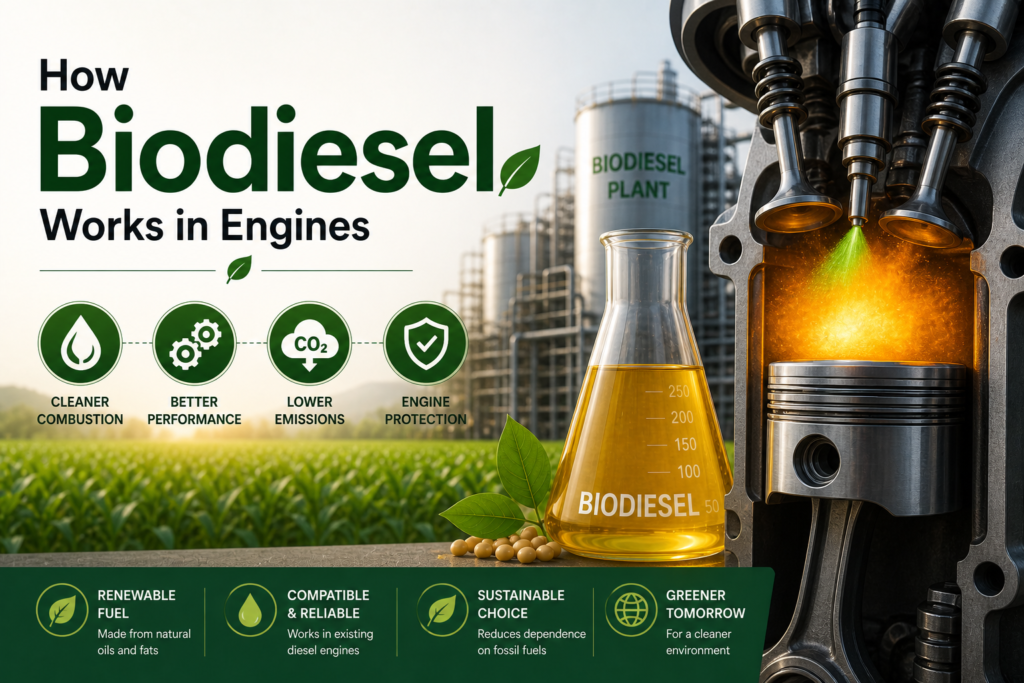
If you’re wondering how biodiesel works, it functions similarly to conventional diesel but with cleaner combustion. Biodiesel can be used directly or blended with diesel in different ratios like B5, B10, or B20.
When used in engines:
- It improves lubrication, reducing engine wear
- Produces fewer emissions
- Works without major modifications (for lower blends)
In India, blends like B20 are gaining traction, making biodiesel a practical and scalable solution. This is why renewable diesel India alternatives like biodiesel are being actively promoted.
How Biodiesel is Produced in India?
Biodiesel is widely used across multiple sectors in India due to its versatility and sustainability benefits.
1. Transportation Sector
Used in trucks, buses, and commercial fleets as blended fuel.
2. Industrial Applications
Factories and generators use biodiesel as an alternative to diesel.
3. Agriculture
Farm equipment and irrigation pumps can run on biodiesel blends.
4. Power Generation
Used in diesel generators for cleaner energy production.
With growing adoption of UCO biodiesel India, these applications are expanding rapidly across industries.
Biodiesel vs Renewable Diesel in India
Many people confuse biodiesel with renewable diesel. While both are eco-friendly, they are different.
- Biodiesel (FAME): Produced via transesterification India, used in blends
- Renewable diesel India: Produced via advanced refining, chemically identical to diesel
Both contribute to sustainability, but biodiesel is currently more accessible and widely produced in India.
Why Biodiesel is Important for India?
Understanding what is biodiesel India is important because it directly impacts the country’s energy future.
Key Benefits
- Reduces crude oil imports.
- Utilizes waste like UCO.
- Lowers emissions and pollution.
- Supports rural and agricultural economy.
With government policies promoting biofuels, biodiesel is set to play a major role in India’s clean energy transition.
Challenges in Biodiesel Adoption
Despite its benefits, biodiesel faces certain challenges in India:
- Feedstock availability (consistent UCO supply)
- Infrastructure and distribution gaps
- Awareness among businesses and consumers
However, improvements in biodiesel production India and policy support are gradually addressing these issues.
Future of Biodiesel in India (2026 and Beyond)
The future of biodiesel in India looks promising. With increasing adoption of biofuel policies and growing demand for sustainable fuels, biodiesel is expected to scale rapidly.
The expansion of UCO biodiesel India networks and advancements in transesterification India technology will further strengthen the ecosystem.
As industries move toward cleaner fuels, biodiesel will remain a key component of India’s renewable energy strategy.

Conclusion
Biodiesel is more than just an alternative fuel—it is a sustainable solution for India’s energy challenges. From understanding the biodiesel definition to exploring biodiesel production India, its properties, and uses, it is clear that biodiesel has strong potential.
For businesses, investors, and consumers, knowing what is biodiesel India is the first step toward adopting cleaner and more efficient energy solutions.
Frequently Asked Questions
1. What is biodiesel in simple terms?
Biodiesel is a renewable fuel made from natural oils and fats, used as an alternative to diesel.
2. How is biodiesel produced in India?
Through transesterification India, where oils react with alcohol to form FAME biodiesel.
3. Is biodiesel better than diesel?
Yes, biodiesel produces lower emissions and is environmentally friendly, though it has slightly lower energy content.
4. Can biodiesel be used in all engines?
Lower blends like B5 and B20 work in most diesel engines without modification.