
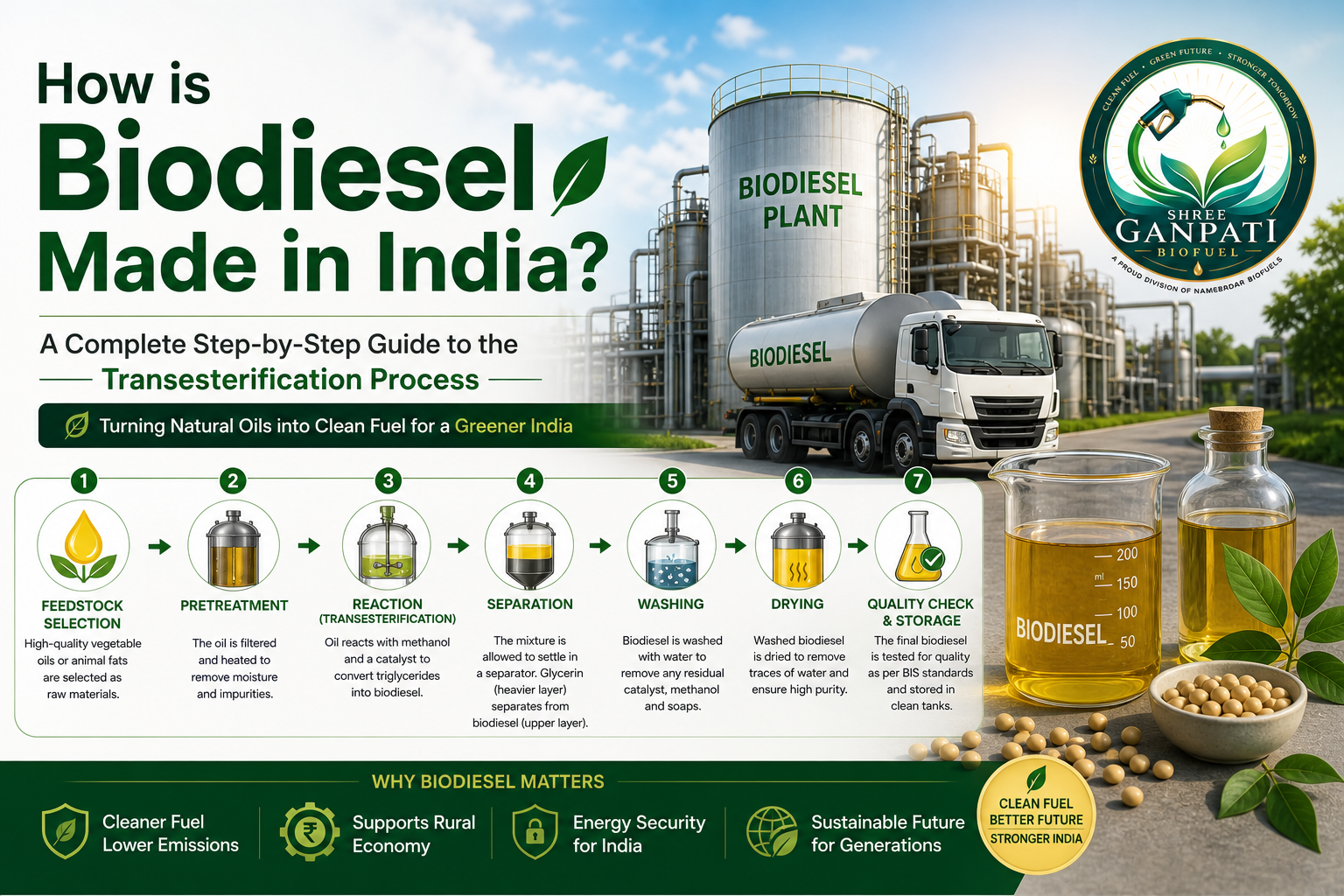
Biodiesel in India is produced by converting used cooking oil (UCO) and animal fats into fuel through a chemical process called transesterification. If you’re asking how is biodiesel made in India, the answer is a structured, multi-stage refining process used at commercial plants to produce clean-burning fatty acid methyl ester (FAME).
At Shree Ganpati Biofuel, a 50 KLPD biodiesel manufacturer based in Bijnor, Uttar Pradesh, this process is carried out using industrial-grade reactors, controlled conditions, and strict quality testing to ensure fuel meets BIS standards.
What is Biodiesel and How is it Made in India?
Biodiesel is a renewable fuel made from used cooking oil (UCO), vegetable oils, or animal fats. If you’re asking how is biodiesel made in India, it is produced through a chemical reaction called transesterification, where oils react with methanol in the presence of a catalyst to form biodiesel (FAME) and glycerol.
This process is widely used across commercial plants in India, including facilities like Shree Ganpati Biofuel, to convert waste oils into clean, usable fuel.
What is the Biodiesel Production Process?
The biodiesel production process is a chemical conversion method where triglycerides (oils/fats) react with alcohol (methanol) in the presence of a catalyst (KOH/NaOH) to produce biodiesel and glycerol.
In simple terms, how transesterification works is:
- Oil + Methanol + Catalyst → Biodiesel (FAME) + Glycerin
This process is the backbone of biodiesel production process India, especially for converting UCO to biodiesel process efficiently at scale.
How is Biodiesel Made in India? (Step-by-Step Process)
Below is the complete 8-stage industrial process used in commercial biodiesel plants:
Stage 1: Raw Material Procurement
The process begins with sourcing feedstock such as used cooking oil (UCO), vegetable oils, or animal fats. In India, UCO to biodiesel process is widely adopted due to government initiatives like RUCO.
The quality of raw material directly impacts the efficiency of the biodiesel manufacturing steps, making proper sourcing critical.
Stage 2: Filtration and Dewatering
The collected oil contains impurities such as food particles, water, and suspended solids. These are removed through filtration and heating.
Dewatering ensures that moisture content is minimized, as water can negatively affect the transesterification process India and reduce conversion efficiency.
Stage 3: Esterification (FFA Reduction)
If the oil has high Free Fatty Acid (FFA) content, it undergoes esterification FFA reduction. This step converts FFAs into esters using acid catalysts.
This stage is essential because high FFA levels can interfere with the main reaction and reduce biodiesel yield. It prepares the feedstock for efficient conversion in the next stage.
Stage 4: Transesterification (Core Reaction)
This is the most critical step in how is biodiesel made in India.
- Methanol-to-oil ratio: 1:6
- Temperature: ~60°C
- Mixing speed: ~350 RPM
- Reaction time: ~120 minutes
- Catalyst: KOH (Potassium Hydroxide)
Inside a biodiesel reactor India, triglycerides react with methanol to form biodiesel (FAME) and glycerol.
This stage defines the efficiency of the entire biodiesel production process.
Stage 5: Gravity Separation
After the reaction, the mixture is allowed to settle. Due to density differences:
- Biodiesel forms the upper layer
- Glycerol settles at the bottom
This natural separation process is known as glycerol separation biodiesel and is critical for isolating usable fuel.
Stage 6: Water Washing
The crude biodiesel still contains impurities like residual catalyst, methanol, and soap. It is washed with water to remove these contaminants.
This step improves fuel quality and ensures compliance with standards in the biodiesel purification process.
Stage 7: Dehydration (Drying Process)
After washing, the biodiesel contains moisture that must be removed.
- Temperature: 100–110°C
This stage ensures the final product is dry and stable, improving shelf life and engine performance.
Stage 8: Quality Testing and Dispatch
The final biodiesel undergoes rigorous testing for parameters such as:
- Density
- Viscosity
- Flash point
- Acid value
Only after meeting BIS standards is the biodiesel approved for dispatch. This completes the biodiesel manufacturing steps.
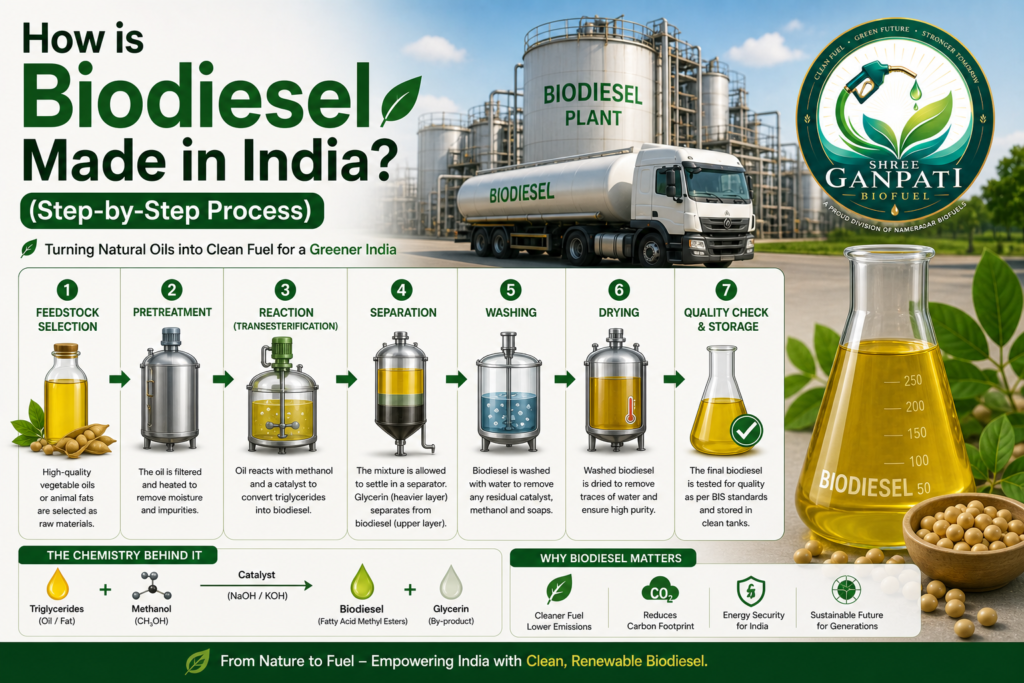
How Transesterification Works?
If you want a simple answer to how transesterification works, it is a chemical reaction that breaks down oil molecules and converts them into fuel.
- Triglycerides are split into esters
- Methanol helps form FAME biodiesel
- Catalyst speeds up the reaction
This is the core of the transesterification process India, making biodiesel production efficient and scalable.
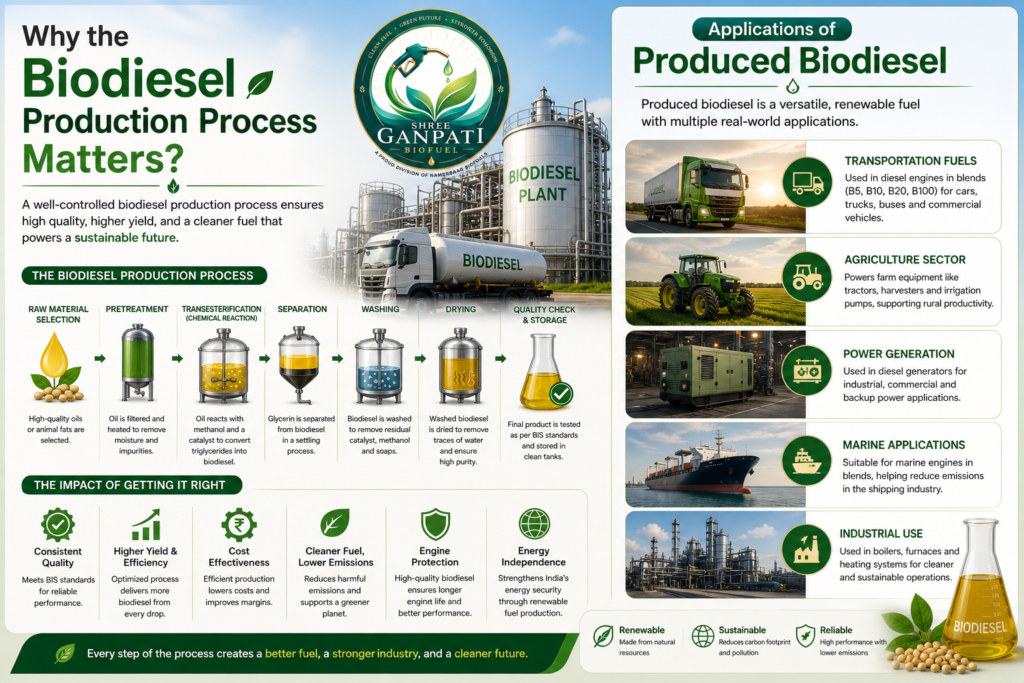
Why the Biodiesel Production Process Matters?
Understanding how is biodiesel made in India is important for multiple reasons:
- Ensures fuel quality and engine compatibility
- Improves efficiency of UCO to biodiesel process
- Reduces waste and supports circular economy
- Helps meet sustainability and emission goals
For businesses, knowing the biodiesel production process helps in evaluating suppliers and ensuring compliance.
Applications of Produced Biodiesel
Once produced, biodiesel is used across multiple sectors:
- Transportation (B20 blends in fleets)
- Industrial fuel for boilers and generators
- Agriculture equipment
- Power backup systems
The efficiency of the biodiesel purification process directly impacts performance in these applications.
Future of Biodiesel Production in India
The future of biodiesel production process India is driven by increasing adoption of sustainable fuels and policy support.
With improvements in biodiesel reactor India technology and expansion of UCO to biodiesel process, production efficiency is expected to increase significantly.
As demand for cleaner fuels rises, understanding how is biodiesel made in India will become even more important for businesses and investors.
Conclusion
Biodiesel production is a well-defined, scalable process that converts waste oils into valuable fuel. From esterification FFA reduction to glycerol separation biodiesel, each step plays a crucial role in ensuring high-quality output.
For anyone looking to understand how is biodiesel made in India, this step-by-step process provides a complete picture of how modern biodiesel plants operate efficiently and sustainably.
Frequently Asked Questions
1. How is biodiesel made in India?
Biodiesel is made by converting used cooking oil and fats into fuel through the transesterification process using methanol and a catalyst.
2. What is the transesterification process?
It is a chemical reaction where oils react with methanol to produce biodiesel (FAME) and glycerol.
3. What are the steps in biodiesel production?
The main biodiesel manufacturing steps include filtration, esterification, transesterification, separation, washing, drying, and testing.
4. What is UCO to biodiesel process?
It is the conversion of used cooking oil into biodiesel through chemical processing at industrial plants.
5. Is biodiesel production profitable in India?
Yes, with rising demand and government support, biodiesel production is becoming a profitable and scalable business in India.